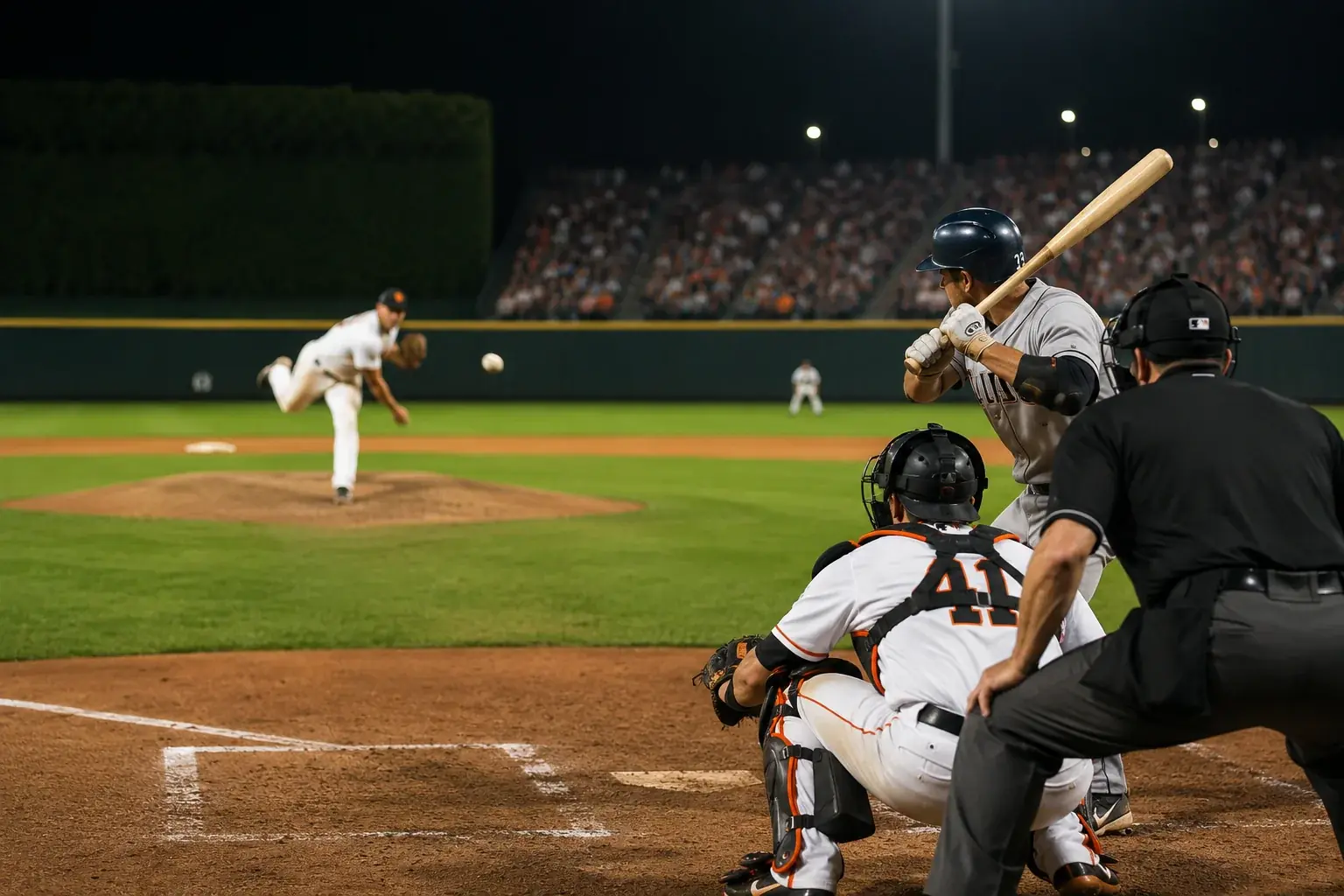
MLB Weather Impact on Betting: Scoring Totals Analysis
 Available in US

The most expensive lesson I ever learned in baseball betting came from a summer evening at Wrigley Field — not because I was there, but because I ignored what was happening above the stadium. The wind was blowing out to centre at 18 mph, turning routine fly balls into souvenirs. I had the under. The game finished 11-8. That was the day wind direction became a permanent line on my pre-game checklist, right next to starting pitchers and park factors.
Weather is the overlooked variable in MLB wagering. UK bettors who would never dream of ignoring pitch conditions in a cricket test match routinely skip the weather tab when betting baseball. The sport is played outdoors at twenty of thirty MLB stadiums, across a season that stretches from chilly April nights to blistering August afternoons. Temperature, wind, and humidity alter the physics of how a baseball travels, and those alterations show up on the scoreboard. If you are betting totals without checking the forecast, you are flipping a coin with one side filed down.
Impact of Wind Direction in Open-Air MLB Stadiums
Wind is the single most impactful weather variable for MLB totals, and Wrigley Field in Chicago is the textbook example. The stadium sits with its outfield open to Lake Michigan, and the prevailing wind direction changes daily. When the wind blows out — from home plate toward the outfield — fly balls carry further, warning-track pop-ups become home runs, and totals regularly sail over the posted number. When it blows in, the same stadium plays like a pitcher’s park, with deep drives dying at the wall.
Coors Field in Denver amplifies the wind effect at altitude. With a park factor of 1.25 for runs — already 25% above the league average due to thin air — even moderate wind blowing out can push a game into double-digit scoring territory. I treat any Coors game with outbound wind above 10 mph as an automatic lean toward the over, regardless of the pitching matchup. The physics simply overwhelm the individual performance of the starters.
Not all open-air parks respond to wind equally. Stadiums with tall outfield walls or enclosed outfield structures — like the right-field porch at Yankee Stadium or the Green Monster at Fenway — partially shield the field from crosswinds. Oracle Park in San Francisco catches cold wind off the bay that blows in from right field, suppressing home runs for right-handed hitters by roughly 21% relative to the league. That marine wind is consistent enough to be factored into park factor data, but on the rare warm, still evening in San Francisco, the park plays very differently from its reputation.
My rule of thumb: check wind speed and direction at any outdoor venue before placing a totals bet. If wind is blowing out above 12 mph, add half a run to my model’s estimated total. If blowing in above 12 mph, subtract half a run. Below 8 mph in any direction, I treat wind as neutral and move on to other factors.
Temperature and Ball Flight: The Physics of Hot Days
A baseball hit at 100 mph in 55-degree weather does not travel as far as the same ball hit at 100 mph in 95-degree weather. Warm air is less dense than cold air, which reduces drag on the ball and allows it to carry further. The difference is not trivial — studies have estimated that a fly ball travels roughly four additional feet for every ten-degree increase in temperature. Over a nine-inning game with dozens of balls hit into the air, those extra feet convert some outs into hits and some warning-track flies into home runs.
April and September games — when temperatures in northern cities like Chicago, Minneapolis, and Boston can dip into the low 50s or even the 40s — consistently produce fewer runs than the same matchups would generate in July. Lineups are the same, pitchers are the same, but the air is heavier and the ball dies faster. I lower my expected totals by roughly 0.3 runs for games played below 55 degrees and raise them by a similar amount for games above 90 degrees.
Night games and day games at the same stadium can differ meaningfully too. A 1:00 pm start in August with the sun baking the field plays hotter than a 7:00 pm first pitch at the same venue. If you are betting afternoon games during summer months, the temperature edge compounds with the fatigue factor — hitters tend to see the ball well in daylight, and tired pitchers lose velocity as the heat wears on them.
Humidity, Rain Delays, and Schedule Disruptions
Humidity has a subtler effect than wind or temperature, but it still registers. Contrary to popular belief, humid air is actually less dense than dry air at the same temperature — water molecules are lighter than the nitrogen and oxygen they displace. So high humidity, in theory, helps the ball carry marginally further. The practical effect on scoring is small enough that I treat it as a tiebreaker rather than a primary factor. If everything else in my model points toward the over and the humidity is above 70%, it nudges my confidence up by a fraction.
Rain is the more disruptive weather element. A game halted by rain after five complete innings is official, and bets are settled on the score at that point. If the game has not reached the five-inning threshold, it can be suspended and resumed later — and different bookmakers handle suspended games differently. BettorEdge analysts have noted that stadium environments dramatically shape how weather interacts with performance, and rain at parks with retractable roofs is a non-factor, while rain at open-air venues can wipe out an entire evening’s betting card.
Rain delays mid-game also affect live betting. A starter pulled before a delay rarely returns after it, which means the bullpen shoulders the remaining innings. If I have a live bet riding on the starting pitcher’s performance, a rain delay is a wildcard I cannot model. My approach is conservative: I avoid placing live bets on games with rain in the forecast, and I size my pre-game bets smaller when there is a meaningful chance of disruption.
A Quick Weather Check Before Every MLB Bet
The weather check takes three minutes. I am not asking you to become a meteorologist — just to add one tab to your pre-game routine. For each game on my shortlist, I pull up the hourly forecast for the stadium’s city and check three things: temperature at first pitch, wind speed and direction, and precipitation probability.
Temperature above 85 degrees at an outdoor park gets a small plus for the over. Temperature below 55 gets a small plus for the under. Wind blowing out above 12 mph at Wrigley, Coors, or any open-air park with shallow outfield walls gets a significant over adjustment. Wind blowing in at the same speed flips the adjustment. Rain probability above 40% triggers a sizing reduction or a skip. That is the entire system — no spreadsheets required, no algorithms, just a disciplined look at three data points that most bettors ignore.
The edge from weather data is modest per game. You are not going to find a weather-driven edge worth 5% on a single bet. But across a full MLB season — six months of games, five to fifteen on any given night — those modest edges compound. A bettor who consistently adjusts for wind, temperature, and rain will end the season with better results than one who bets the same games with the same analysis but never opens a weather app. The discipline is small. The difference over time is not.
Does hot weather always mean more runs in MLB games?
Not always, but the correlation is strong. Warm air is less dense, which reduces drag on the baseball and allows fly balls to carry further. The effect is most pronounced above 90 degrees Fahrenheit at outdoor parks. However, hot weather alone does not override a dominant pitching matchup — it is one factor among several, and it matters most when the game total is already projected near the posted line.
Where can I check weather conditions for tonight’s MLB games?
Any weather service that provides hourly forecasts by city works well. Several MLB-specific sites also compile weather data alongside starting pitchers and park information on a single page. The key data points are temperature at first pitch, wind speed and direction at the stadium, and precipitation probability during the scheduled game window.
Created by the ”” editorial team.