MLB Futures Betting: World Series and Seasonal Player Markets
 Available in US
In February 2024, I placed a futures bet on a team to win the American League pennant at 15.00. They made the Championship Series. The bet lost – they fell one round short – but the process that led me to it was sound: I had identified a team with a strong rotation, an undervalued lineup, and a price that reflected last season’s disappointment rather than next season’s potential. That is the essence of futures betting. You are buying a team’s season at a fixed price, and the earlier you buy, the wider the margin for error – and profit – tends to be.
MLB futures markets cover everything from the World Series winner to individual awards like MVP and Cy Young, plus season win totals for all 30 teams. The American Gaming Association projects that legal sports betting will generate an additional $1.7 billion in revenue for MLB and the NBA combined, a figure that underscores how central futures betting has become to the sport’s commercial ecosystem. For UK bettors, futures offer a way to stay engaged with the MLB season from spring training through October without needing to analyse a new slate of games every night.
Analyzing World Series Winner Futures Markets
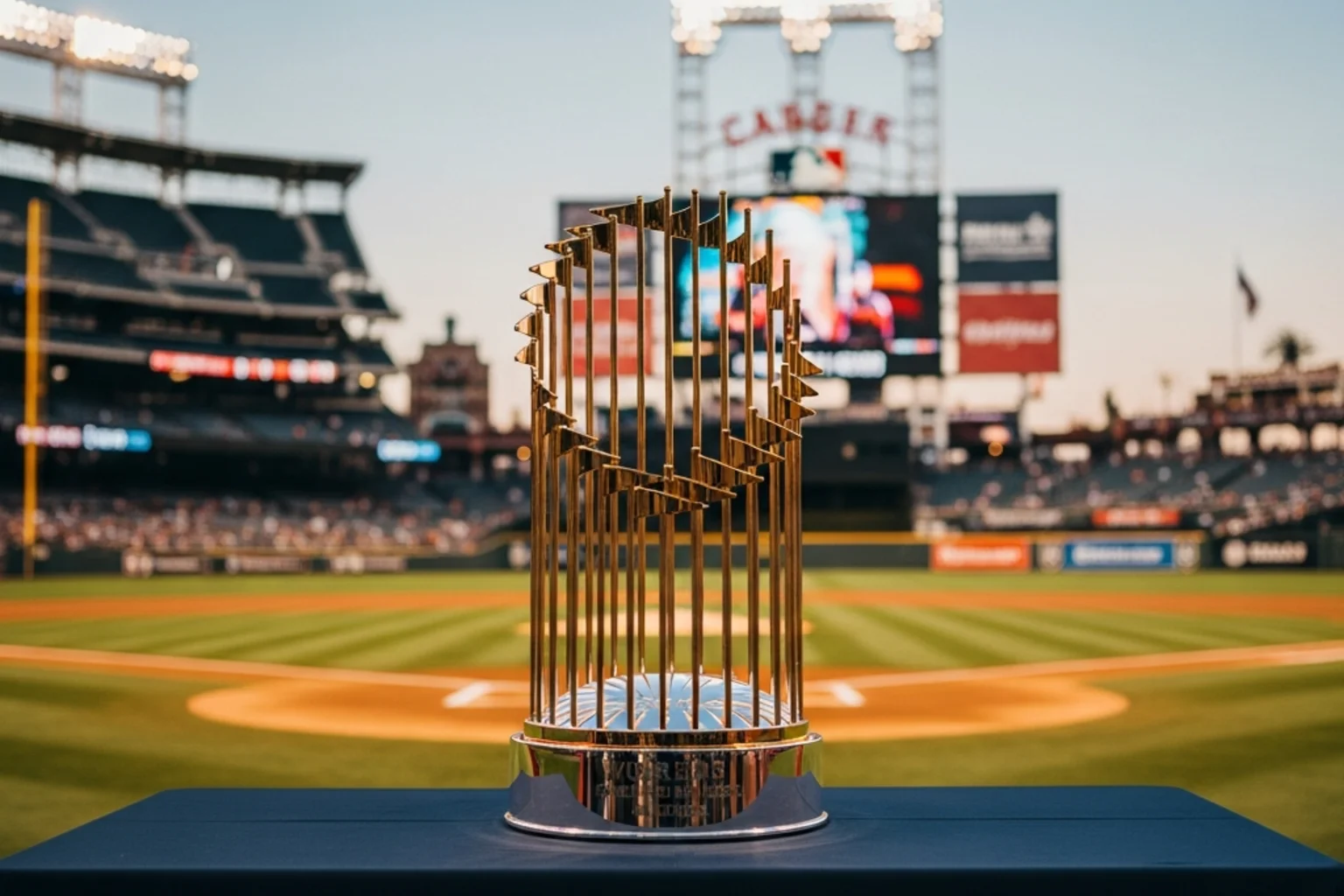
The World Series winner market is the one most UK bookmakers open first each year, usually in late November after the previous season ends. Prices are at their widest during the off-season, when the market is still absorbing free agent signings, trades, and roster construction changes. By Opening Day in late March, the field has narrowed and the favourites have shortened considerably.
I have found the best value window for World Series futures sits between mid-December and early February. This is when teams are actively acquiring players but the market has not yet fully recalculated the implications. A team that signs a front-line pitcher in January might see its World Series price drop from 20.00 to 14.00 by March – but the price on the day of the signing, before the market adjusts, can be significantly higher than where it settles.
The field is deep enough that you can back two or three teams at long prices and still have a positive expected value if your assessment is accurate on even one of them. I typically place two or three World Series futures each off-season, allocating about 2% of my seasonal bankroll to each. If one hits, the return covers the other two losses many times over. If none hit, the cost is manageable. Sara Slane, a senior figure at the American Gaming Association, has noted that the four major American sports leagues stand to earn billions from legal betting, and the World Series is a flagship event driving a significant share of that handle.
Division and Pennant Futures
Division futures are the workhorses of my MLB futures portfolio. They settle earlier than the World Series market – as soon as the regular season ends – and the edge is often clearer because the sample size is smaller. You are predicting a team to finish first among four or five opponents, not to beat the entire league over a seven-month gauntlet plus three rounds of playoffs.
The dynamics within divisions create pricing inefficiencies that the broader World Series market does not always capture. In a division where one team is a clear favourite at 1.60, the second-best team might be priced at 4.00. If the favourite stumbles – an injury to a key starter, a slow April – that second team’s price can drop to 2.50 within weeks. I have had division futures where the team I backed was 6.00 in February and 2.00 by June, at which point I could either ride the bet or look for a hedging opportunity.
Pennant futures (American League or National League winner) sit between division winners and the World Series in terms of both difficulty and price. They require a team to win a division or wild card spot and then win two playoff rounds. The prices are shorter than World Series odds but longer than division odds, and the value typically lies with teams that have strong rotations, since pitching depth matters more in a playoff format where starters pitch every fourth day instead of every fifth.
MVP, Cy Young, and Rookie of the Year Markets
Award futures add a different dimension to MLB betting because they depend on individual performance rather than team outcomes. The MVP and Cy Young markets are the most liquid, and both follow a similar value curve: prices are widest in March, narrow through the season as candidates emerge, and compress sharply in September when the field is down to three or four realistic contenders.
I approach award markets with one rule: I only bet on players at spring training or pre-season prices. Once the season is underway and a player is performing at an MVP level, his price has already moved to 3.00 or shorter, and the value has evaporated. The edge in award futures comes from identifying candidates before the market does – a player who made a mechanical adjustment during the off-season, moved to a hitter-friendly park, or is entering his physical prime at 27 or 28 years old.
Rookie of the Year is the thinnest market of the three, with fewer candidates and less liquidity at UK bookmakers. But it is also the market where information asymmetry is greatest, because minor league performance is poorly covered outside the US. If you are willing to dig into prospect rankings and spring training stat lines, ROY futures can offer prices that the casual market wildly misprices.
Season Win Totals and Over/Under Projections
Season win totals are the futures market I bet most frequently, because the question they ask is the most analytical: will this team win more or fewer games than the number posted? Each team’s win total is set by the bookmaker – say, 85.5 for a mid-tier contender – and you back the over or the under. With each team playing 162 games, the variance in outcomes is wide enough that the market misprice does not need to be enormous for the bet to have value.
I evaluate win totals using preseason projection systems (publicly available from several analytics sites) and compare the projected win total to the bookmaker’s posted number. If the projection says 89 wins and the book has the over/under at 85.5, the over at 1.90 is worth a look. The key is to trust the projection models over narrative – a team that “underperformed” last year might not have underperformed at all when you strip out run differential and Pythagorean record.
Win totals settle at the end of the regular season, which means your money is locked for six months. That illiquidity is the cost of the bet, and it is why the prices tend to be slightly more generous than in-season markets. For a bettor with patience and a structured approach, season win totals are the most repeatable futures market in MLB.
When to Place MLB Futures for Maximum Value
Timing is the single biggest lever in futures betting. The same team at the same win probability can be 12.00 in December and 6.00 in April, not because anything material changed but because the market absorbed information and adjusted. Your goal is to identify value before the market does, which means acting in the windows where information flow is highest and market adjustment is slowest.
For World Series and division futures, the prime window is December through February. Off-season transactions create the most significant price movements, and the market often underreacts to depth signings (relief pitchers, bench bats) that improve a team’s win total without generating headline attention.
For award futures, the prime window is the first two weeks of March, during spring training. Players are being evaluated in real games for the first time, and early performance signals – even in exhibition games – can shift the market before the regular season confirms the trend.
For season win totals, I place my bets in the week before Opening Day, when lineups are finalised and the rotation order is set. The market is at its sharpest by this point, but late injuries or roster surprises can still create last-minute mispricings that close within 48 hours of the first game. Being ready to act in that narrow window is what makes win total futures consistently profitable.
Can I bet on the World Series from the UK?
Yes. Most major UKGC-licensed bookmakers offer World Series winner futures, typically from late November through the postseason in October. Prices are shown in decimal format and stakes are accepted in GBP. The market is usually listed under baseball or MLB in the futures or outrights section of your bookmaker’s app.
When is the best time to place an MLB futures bet?
The best value window for team futures like the World Series and division winners is December through February, when off-season transactions create price movements the market is slow to absorb. For award futures like MVP and Cy Young, spring training in early March offers the widest prices. Season win totals are best placed in the week before Opening Day, when rosters are finalised but last-minute surprises can still create mispricings.
Do UK bookmakers offer MLB MVP and Cy Young futures?
The larger UKGC-licensed operators generally offer MVP and Cy Young futures for both the American and National League. Availability can be patchy at smaller bookmakers or early in the off-season. Rookie of the Year futures are the least commonly offered MLB award market at UK bookmakers.
Created by the ”” editorial team.