MLB Betting Glossary — Baseball Terminology for UK Punters
 Available in US

When I started following baseball from the UK, the language barrier was not the Atlantic — it was the jargon. Commentators threw around terms like “bullpen,” “run line,” and “WHIP” as if everyone had grown up watching nine innings on a Saturday afternoon. I had not. Most UK bettors have not. Baseball uses a vocabulary that blends sporting terminology with statistical shorthand and American betting slang, and without a working knowledge of that vocabulary, even the best analytical article reads like a foreign language. Across the 2,430 regular-season games, this glossary covers the terms you will encounter most often as a UK bettor learning to navigate MLB markets.
I have organised this glossary into three sections: game terms (the sport itself), betting terms (the wagers you place), and analytics terms (the statistics that inform your decisions). Each entry is defined with the UK bettor in mind, using UK comparisons and decimal-odds examples wherever possible. Bookmark this page and refer back to it whenever you encounter a term you do not recognise in your baseball betting journey.
Baseball Game Terms: Innings, Outs, Runs, and Positions
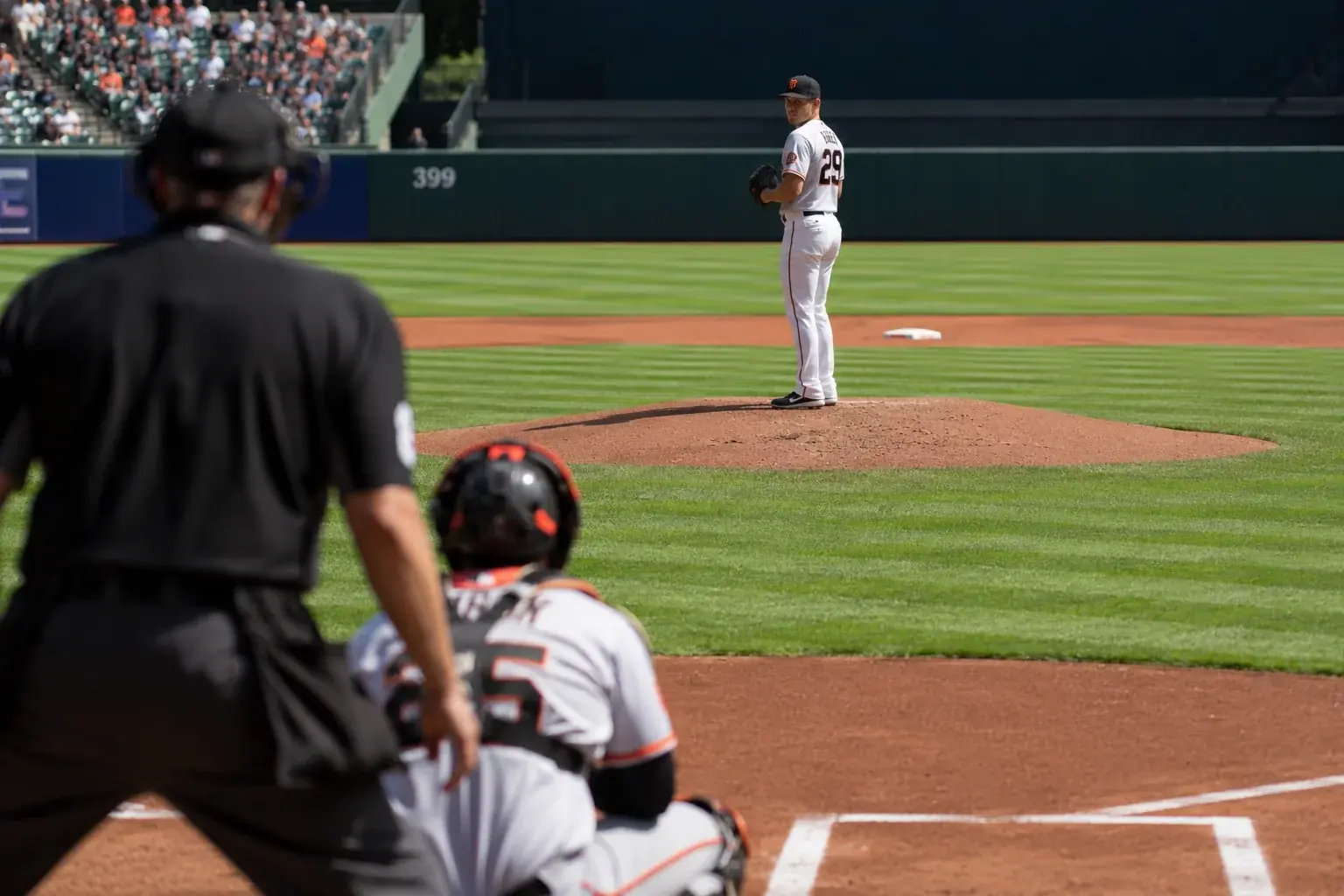
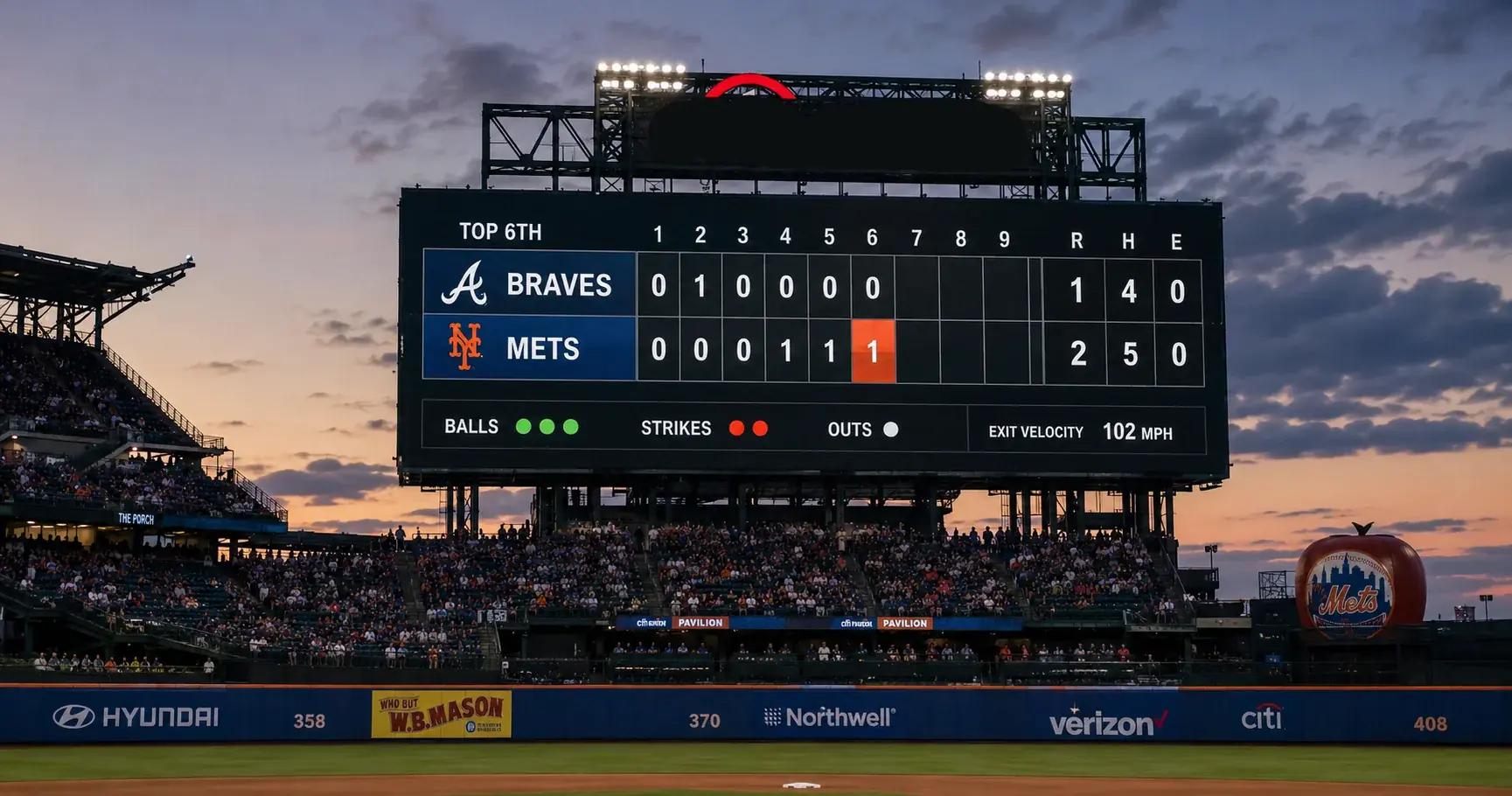
Inning. The basic unit of a baseball game. Each inning has two halves: the top half, where the visiting team bats, and the bottom half, where the home team bats. A standard game consists of nine innings. If the score is tied after nine, extra innings are played until one team leads at the end of a complete inning. Think of an inning as roughly equivalent to a period in hockey or a set in tennis — a structural block within the contest.
Out. Each team gets three outs per half-inning before their batting turn ends. Outs are recorded by strikeouts (the batter swings and misses or watches a third strike), fly-outs (a fielder catches a ball hit in the air), and ground-outs (a fielder throws the ball to a base before the runner arrives). Twenty-seven outs constitute a full nine-inning game for each team.
Run. Baseball’s equivalent of a goal. A run is scored when a batter advances around all four bases and touches home plate. Game totals, team totals, and run-line bets all revolve around runs. A typical MLB game produces between six and ten total runs, though high-scoring games at hitter-friendly parks can reach fifteen or more.
Starting pitcher. The pitcher who begins the game. In modern baseball, a starter typically pitches five to seven innings before being replaced by relievers from the bullpen. The identity of the starting pitcher is the single most important variable for betting purposes, as one player’s performance dominates the game’s outcome to a degree that no position player matches.
Bullpen. The collection of relief pitchers who replace the starter. A bullpen typically consists of seven or eight pitchers with varying roles: the closer pitches the final inning to protect a lead, set-up men pitch the seventh and eighth innings, and middle relievers handle earlier bridge work. Bullpen quality and availability are critical factors for live betting and late-game analysis.
Home run. A batted ball hit over the outfield fence in fair territory. The batter and all baserunners score. Home runs are the most dramatic scoring event in baseball and the subject of the sport’s most popular player prop bets.
Strikeout. An out recorded when the batter accumulates three strikes — either by swinging and missing, watching a pitch called a strike, or fouling a ball off with two strikes (which does not count as a third strike unless it is caught by the catcher). Strikeout props are among the most researchable and profitable prop markets in MLB betting.
Betting Terms: Moneyline, Run Line, Handle, and Juice
Moneyline. The equivalent of a match-result bet in football, minus the draw. You pick which team wins the game outright. In UK terms, this is the “match winner” market. MLB moneylines are the most commonly bet market in baseball. Decimal odds of 1.60 on the favourite and 2.50 on the underdog is a typical moneyline spread.
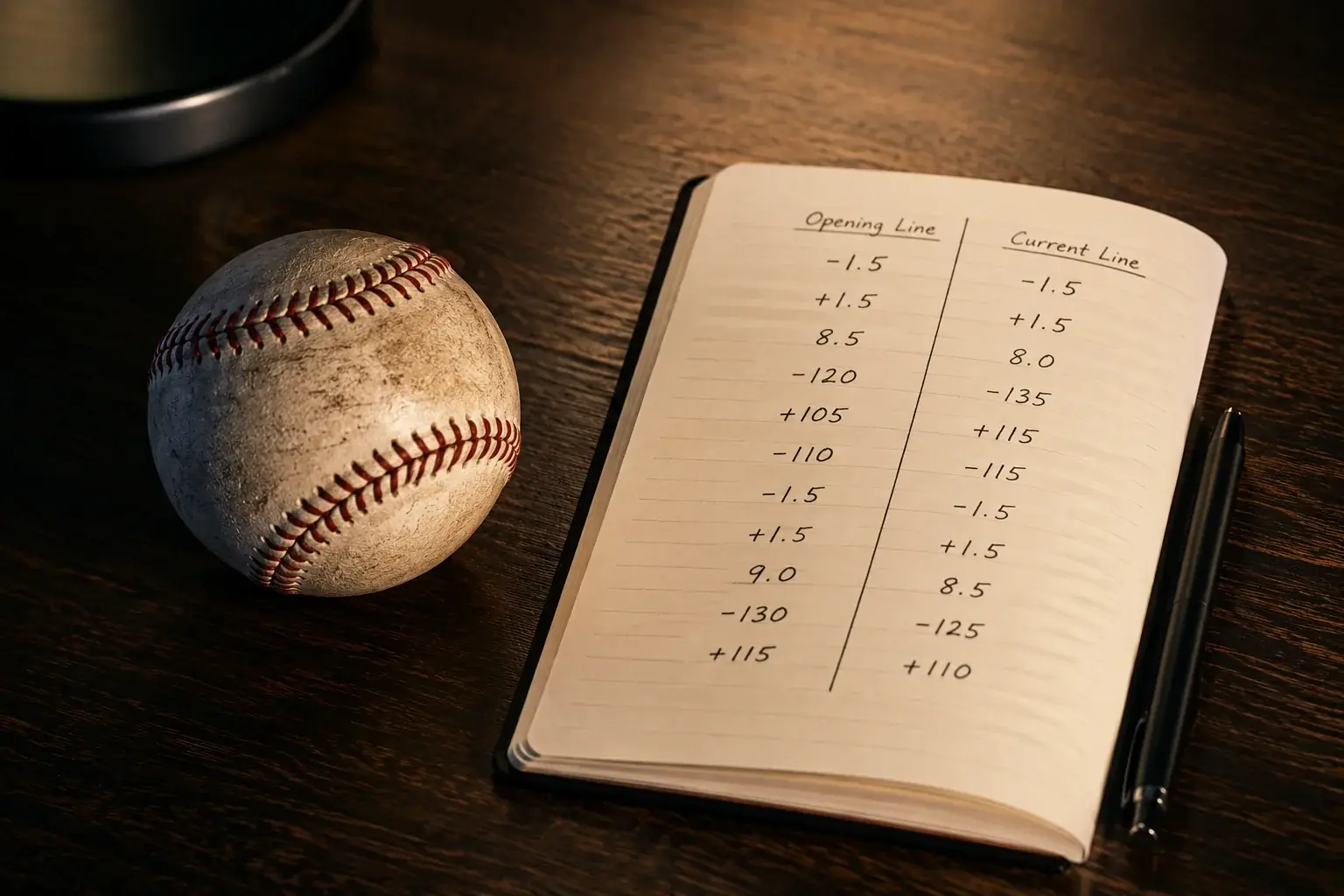
Run line. Baseball’s version of the point spread or Asian handicap. The standard run line is ±1.5 runs: the favourite at -1.5 (must win by two or more) and the underdog at +1.5 (can lose by one and still cover). In football terms, this is a -1.5 goal handicap. Alternate run lines at ±2.5 or ±3.5 are also available at most bookmakers.
Totals (over/under). A bet on whether the combined score of both teams will be over or under a posted number. A typical MLB total sits between 7.5 and 9.5 runs. The concept is identical to the goals over/under in football — you are betting on the game’s scoring output, not the winner.
Handle. The total amount of money wagered on a market or event. In UK terms, this is the turnover. A large handle indicates heavy betting volume, which generally means tighter lines and more efficient pricing. The average sportsbook hold in the US runs at 10.15%, meaning bookmakers retain roughly ten pence of every pound wagered over time.
Juice (vig, margin). The bookmaker’s built-in edge on every bet. In UK terminology, this is the overround or margin. If both sides of a moneyline are priced at 1.91, the implied probabilities sum to 104.7% rather than 100%. That 4.7% is the juice — the price you pay for the privilege of betting. The lower the juice, the better the value for the bettor.
Sharp. A professional or highly informed bettor whose action bookmakers respect and track. When sharps bet one side of a game, the line moves. Being identified as sharp by a UK bookmaker typically results in account restrictions — stake limits, withdrawal delays, or closure.
Square. A recreational bettor who bets based on narrative, team loyalty, or surface-level analysis rather than data-driven edge. The majority of handle comes from square bettors, and the juice is calibrated to extract profit from their collective action. Every sharp bettor was a square once.
Closing line value (CLV). The difference between the price at which you placed your bet and the closing price (the final odds at game time). Consistently beating the closing line is the strongest predictor of long-term profitability. If you bet at 2.30 and the line closes at 2.15, you captured positive CLV.
Analytics Terms: FIP, wOBA, BABIP, and Park Factor
FIP (Fielding Independent Pitching). A metric that evaluates a pitcher based only on events he controls: strikeouts, walks, hit batters, and home runs. FIP strips out the influence of defence and luck, giving a cleaner picture of pitcher quality than ERA. A pitcher with an ERA of 3.00 and an FIP of 4.20 has been benefiting from good fortune that is likely to regress.
xFIP (Expected Fielding Independent Pitching). FIP with one additional adjustment: it replaces the pitcher’s actual home run rate per fly ball with the league average. This further stabilises the metric and makes it more predictive of future performance. xFIP is my primary pitcher evaluation tool for daily betting.
wOBA (Weighted On-Base Average). An offensive metric that assigns different values to different batting outcomes based on their actual run-scoring impact. A home run is worth more than a single, which is worth more than a walk. wOBA is on a similar scale to OBP (league average around .320) but is far more descriptive of a lineup’s true offensive quality. I use team wOBA as my primary measure of lineup strength.
BABIP (Batting Average on Balls In Play). The batting average on all balls put in play that are not home runs. League average is roughly .300, and extreme deviations in either direction typically regress. A pitcher with a .220 BABIP against is running lucky — hard-hit balls are finding gloves instead of gaps. A pitcher with a .340 BABIP against may be underperforming relative to his true ability.
WAR (Wins Above Replacement). A cumulative stat estimating how many wins a player contributes above what a freely available replacement would provide. Useful for futures betting and season-level analysis but largely irrelevant for individual game bets, where pitching matchup and game context dominate.
Park factor. A number that quantifies how a specific stadium affects scoring. A park factor of 1.25 for runs means that stadium produces 25% more runs than the league average. A park factor of 0.85 means it suppresses scoring by 15%. Park factors are essential for totals and home run prop evaluation.
Exit velocity. The speed of the ball leaving the bat, measured in miles per hour by Statcast cameras. A batted ball above 95 mph is classified as “hard hit.” Exit velocity is the foundation of Statcast-based analysis and the most predictive metric for home run props.
Barrel. A batted ball with the optimal combination of exit velocity and launch angle to produce a high probability of an extra-base hit. MLB defines a barrel starting at 98 mph exit velocity and 26-30 degrees launch angle, with the qualifying zone expanding as velocity increases. Barrel rate is the percentage of a batter’s batted balls that meet these criteria.
What is the UK equivalent of ‘moneyline’ in baseball betting?
The moneyline is the match-winner market, equivalent to the 1X2 result bet in football but without the draw option. In baseball, every game produces a winner, so the moneyline is a two-way market: home team or away team. UK bookmakers list it in decimal odds, and it is the most commonly bet market in MLB.
What does ‘juice’ or ‘vig’ mean on MLB odds?
Juice (also called vig or vigorish) is the bookmaker’s margin — the built-in edge that ensures the house profits over time regardless of individual outcomes. In UK betting terms, it is the overround. You can calculate it by converting both sides of a moneyline to implied probabilities and adding them together; the amount by which the total exceeds 100% is the juice. Lower juice means better value for the bettor.