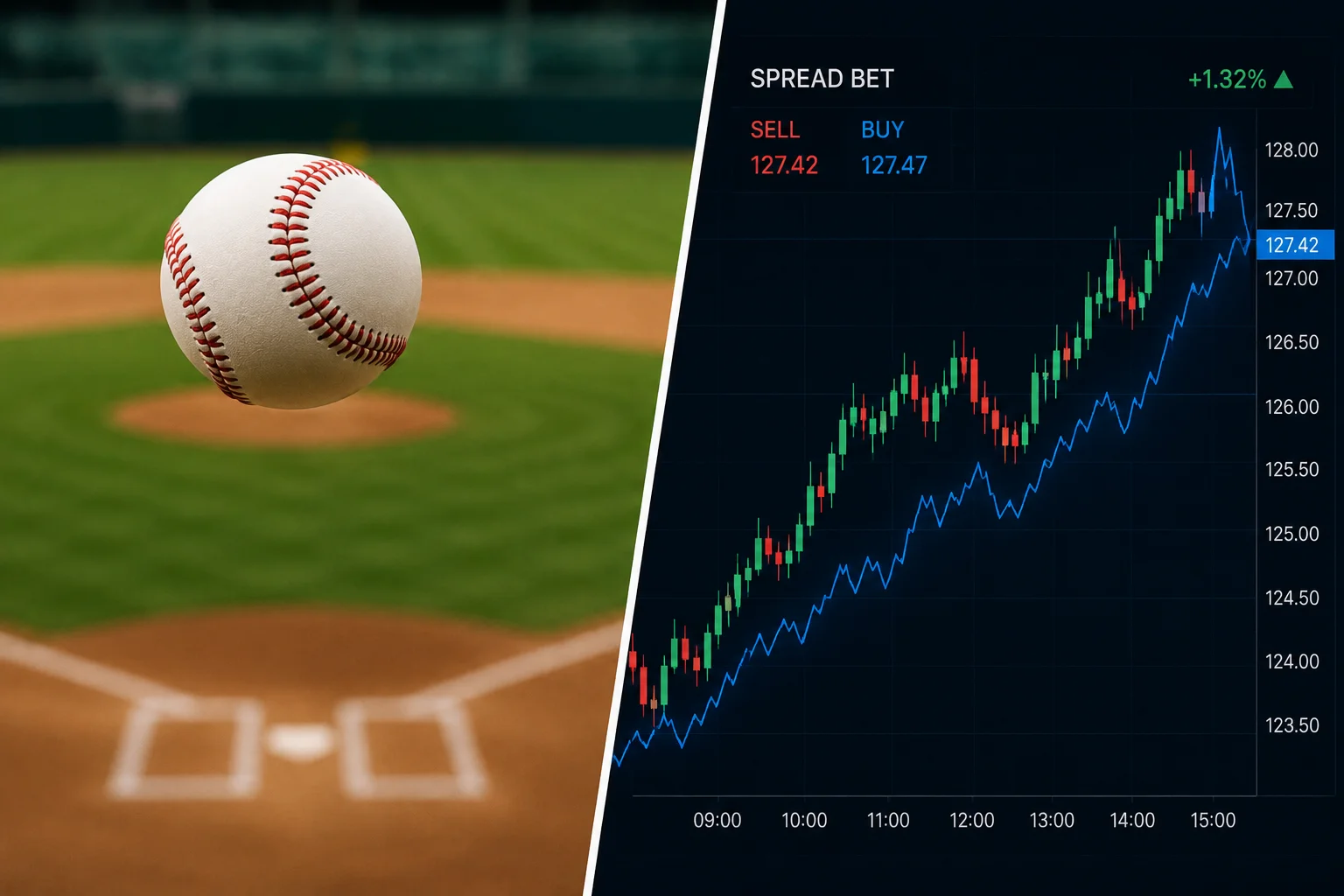
MLB Betting Line Movement — Reading Sharp and Public Money
 Available in US

Every MLB line tells two stories. The first is the opening number — the bookmaker’s initial assessment of a game, posted hours before first pitch. The second is the closing line — the final price available when the game begins, shaped by every dollar and pound that has been wagered in the intervening hours. The gap between those two numbers is the most valuable piece of information available to a baseball bettor, because it reveals where the smart money went. In 2024, United States sportsbooks processed 149.6 billion dollars in legal sports betting handle, and a meaningful share of that volume moved through MLB markets. The professionals who drive those line movements are not guessing. They are acting on models, data, and edges that the bookmaker’s opening line had not fully accounted for.
For UK bettors, understanding line movement is a skill that translates directly from football betting, but with important differences. MLB lines are more volatile than football lines because of the sport’s dependence on starting pitching, which can change on short notice due to injuries, rest decisions, or weather delays. Learning to read those movements — and knowing when to follow them and when to fade them — is a core component of any serious MLB betting strategy.
Why Opening and Closing Lines Differ in MLB
Opening lines are imperfect. They are set by bookmakers using power ratings, pitching matchups, and historical data, but they are released before several key pieces of information are confirmed: the exact batting lineup, the bullpen availability, the weather forecast, and the umpire assignment. As these details emerge throughout the day, money flows into the market, and the line adjusts.
The most significant mover is sharp money — large bets placed by professional bettors or syndicates whose track records the bookmaker respects. When a sharp bettor places a five-figure wager on an underdog at 2.40, the bookmaker does not simply pocket the bet and wait. The bookmaker moves the line — perhaps to 2.30 or 2.25 — to discourage further action on that side and balance its liability. That movement is informational. It tells you that someone with a profitable track record believes the opening price was wrong.
Public money moves lines too, but in a different way. Recreational bettors tend to back favourites, popular teams, and high-profile pitchers. On a night when the Yankees face a small-market opponent, the public side is obvious, and the bookmaker may shade the Yankees’ price down slightly to exploit the expected imbalance in action. Live betting now accounts for roughly half of all handle on mature US markets, and in-play line movements add another layer: a starter who walks the first two batters will see his team’s live moneyline shift dramatically before a single run has scored.
The practical takeaway is that the closing line is a more accurate reflection of the true probability than the opening line. Studies across multiple sports have shown that closing lines are the most efficient predictor of game outcomes. If you consistently bet at prices better than the closing line, you are a winning bettor in the long run. If you consistently bet at prices worse than the closing line, you are not — regardless of whether individual bets win or lose.
Reverse Line Movement: Following the Smart Money
The most actionable line movement signal in MLB is reverse line movement (RLM). This occurs when the line moves in the opposite direction from the public betting percentage. For example: 70% of public bets are on Team A, but the line moves toward Team B. If the majority of individual bets are on one side but the line moves the other way, the implication is that the smaller number of bets on the opposite side carry more weight — either because they are larger in size or because they come from accounts the bookmaker has identified as sharp.
RLM does not guarantee a winner. No signal does. But it identifies situations where the smart money disagrees with the public consensus, and over large samples, the smart money is more often correct. I track RLM signals daily during the MLB season, using free line-movement trackers that display the public betting percentages alongside the actual line changes. When I see a game where 65% or more of public bets are on the favourite but the underdog’s line is shortening (the price is dropping), I flag that game for a closer look.
The closer look is essential. RLM alone is not a betting system. It is a signal that prompts research. I want to understand why the sharp money disagrees with the public before I commit my own stake. Is the underdog’s starting pitcher better than his record suggests? Did a key hitter return from the injured list? Is the favourite playing the third game of a road trip on short rest? If the research confirms the direction of the sharp money, the bet becomes a high-confidence play. If I cannot find a logical reason for the movement, I pass.
Steam Moves and Syndicate Action
A steam move is a sudden, sharp line movement that occurs simultaneously across multiple sportsbooks within a span of seconds. It signals coordinated action — a syndicate or group of sharp bettors hitting the same side of the same game at the same time, before the market can adjust. Steam moves are the most aggressive form of line movement, and they typically indicate strong conviction backed by a significant bankroll.
In the UK, steam moves on MLB are harder to track than in the US because you are observing the movement from outside the primary market. US-focused odds trackers will show a line dropping from 2.30 to 2.10 in under a minute across six different sportsbooks. By the time your UK bookmaker adjusts, the steam move may already be priced in. The window of opportunity is narrow — often minutes rather than hours — and exploiting it requires either real-time alerts or a willingness to monitor US lines during the afternoon UK time window when most MLB opening lines are released.
For most UK bettors, chasing individual steam moves is impractical. The more sustainable approach is to observe the cumulative effect of steam moves on the closing line and use that information retrospectively. If a line opened at 2.40 and closed at 2.10 after multiple steam moves, and you had the opportunity to bet at 2.30 based on your own analysis, you were on the right side of smart money. Tracking your bets relative to the closing line — a practice called Closing Line Value (CLV) analysis — gives you an objective measure of whether your timing and analysis are aligned with the sharpest money in the market.
The core lesson of line movement is humility. The market is not always right, but it is right more often than any individual bettor. When the line moves against your position, it is worth asking whether the market knows something you do not. And when the line confirms your analysis by moving in your direction after you bet, the validation is not luck — it is evidence that your process is sound.
What is reverse line movement in MLB betting?
Reverse line movement occurs when the betting line moves in the opposite direction from the public betting percentage. For example, if 70% of bets are on a favourite but the line moves toward the underdog, it suggests that the minority of bets carry more weight — typically because they come from sharp bettors placing larger wagers. RLM is a signal for further research, not a standalone system.
Should I always follow line movement before placing a bet?
Not always. Line movement is informational, not prescriptive. A line can move for reasons unrelated to sharp analysis — a rumour, a lineup change, or simply lopsided public action. Use line movement as one input alongside your own research on pitching, park factors, and matchup data. The strongest plays occur when your independent analysis aligns with the direction of sharp-money line movement.
Created by the ”” editorial team.