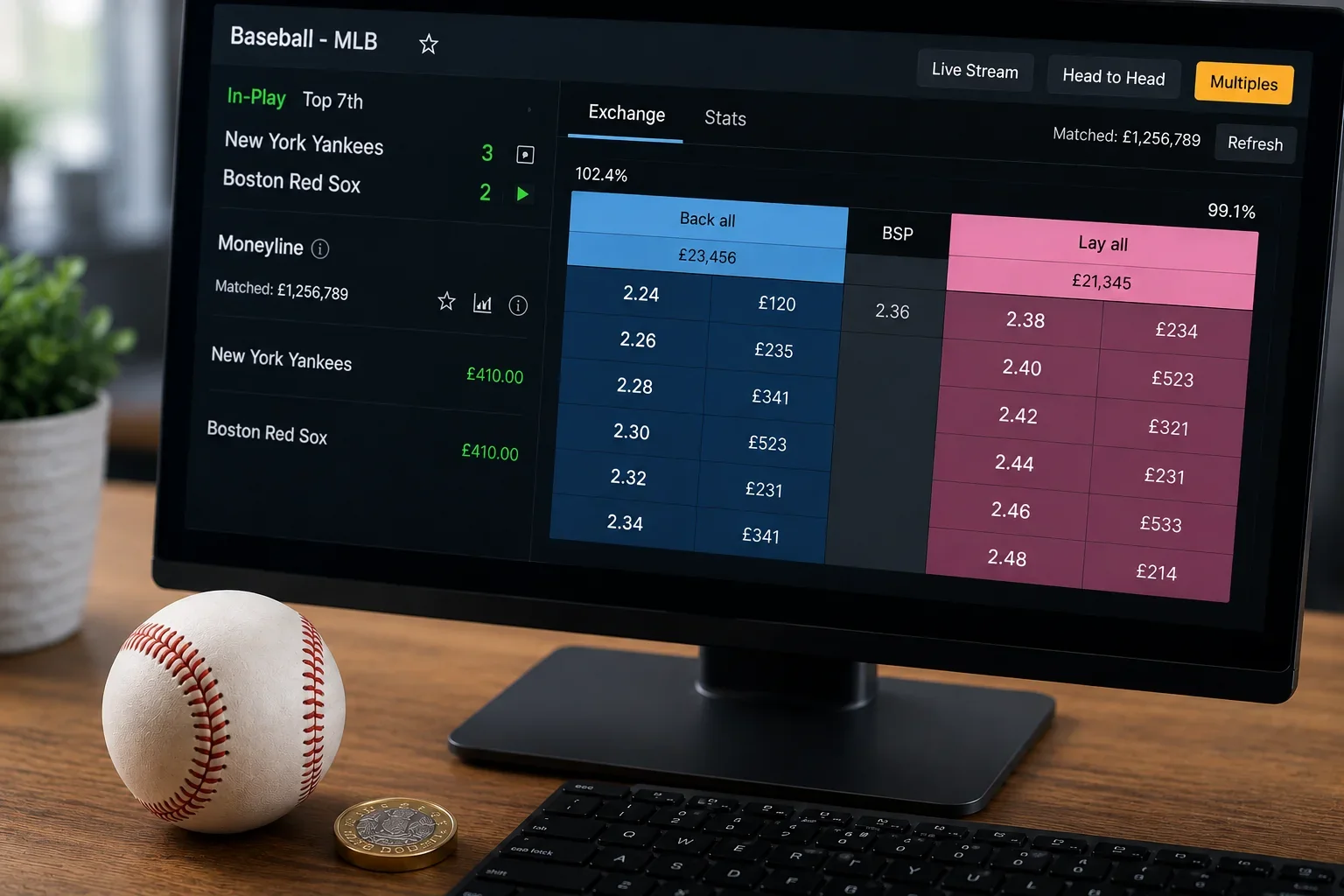
MLB Live Betting: In-Play Markets and Real-Time Odds
 Available in US
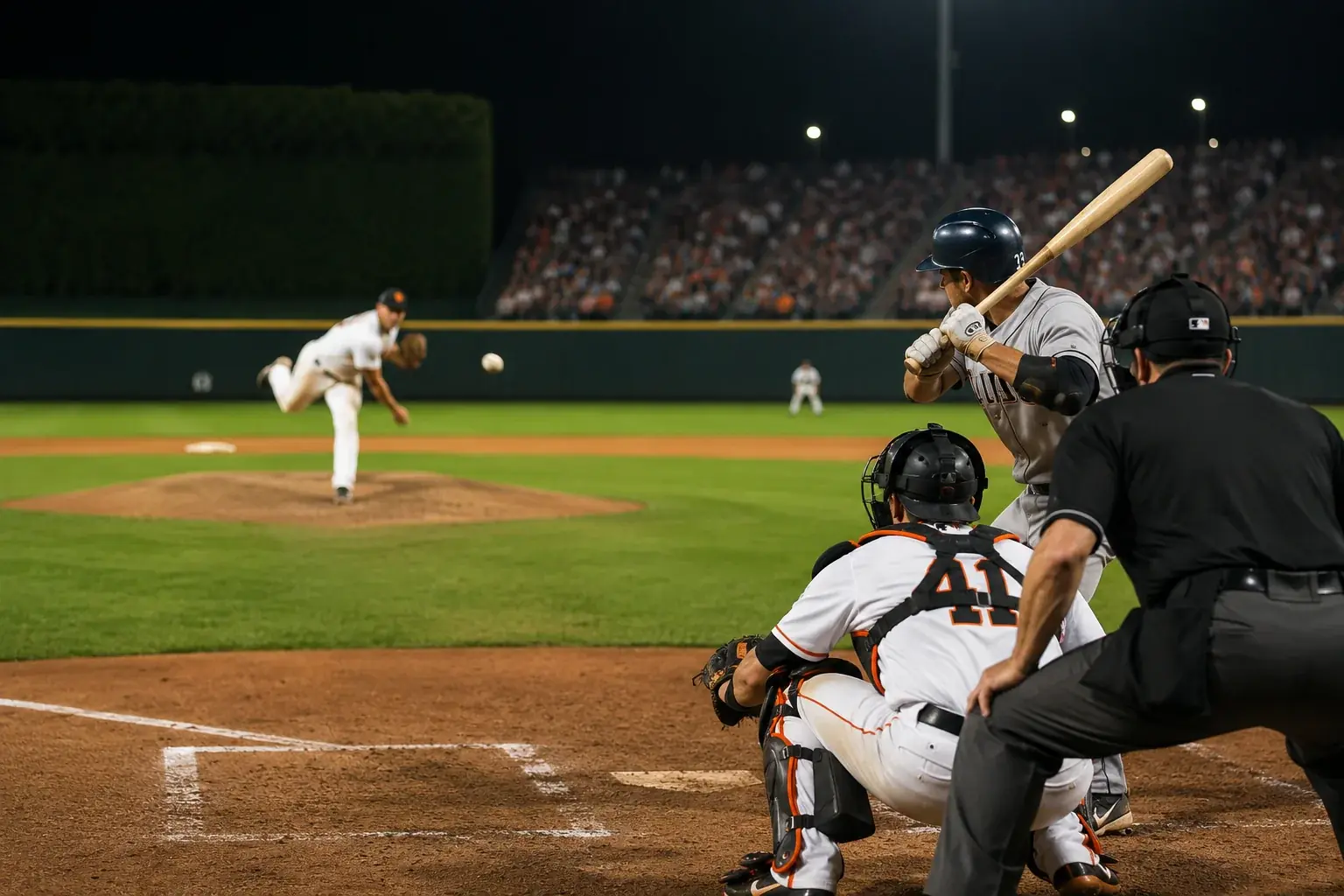
The first live bet I ever placed on a baseball game was an accident. I had intended to back the Astros pre-match, forgot to submit the slip before first pitch, and ended up placing the same moneyline bet three pitches into the top of the first inning. The odds had moved by two cents in my favour. That tiny slip taught me something it took months to fully appreciate: in-play betting on MLB is not just a convenience feature — it is a fundamentally different market with its own rhythms, inefficiencies, and strategic logic.
Live wagering now accounts for approximately half of all handle on mature US sports betting markets, and the share continues to climb. Baseball is uniquely suited to in-play betting because the game is structured around discrete events — each pitch, each at-bat, each half-inning — that produce natural inflection points where the odds recalibrate. Unlike football, where the ball moves continuously and the bookmaker must estimate probabilities in real time, baseball delivers its information in pulses. Every pitch is a data point. Every pitching change is a strategic decision. Every inning break is a window for the bettor who knows what to look for.
Watching the weather conditions change mid-game can provide a massive advantage when engaging in MLB over/under totals betting during the later innings.
Evaluating Live MLB Betting Markets at UK Sportsbooks
Walk into the live betting section of most UK operators during an MLB game and you will find a surprisingly deep menu — deeper, in many cases, than the pre-match offering. The core markets are the live moneyline (updated after every significant event), the live total (the projected final combined runs), and the live run line (the in-game spread, often adjusted from the standard 1.5 as the game develops).
Beyond those, the more established operators offer next-inning markets: will there be a run scored in the next half-inning, and if so, which team scores first. These micro-markets operate on very short timeframes — a half-inning typically lasts 15 to 20 minutes — and they are where much of the recreational live betting volume concentrates. The prices move quickly, the results resolve quickly, and the engagement loop keeps bettors watching the game with money at stake on every pitch.
Some UK bookmakers have expanded into pitch-level props during live games — next pitch strike or ball, next at-bat result, next batter to reach base. These markets are essentially coin flips from a pure probability standpoint, and the bookmaker margin tends to be higher than on standard in-play markets. I treat them as entertainment, not strategy. The real edges in live betting come from the moneyline and totals markets, where your understanding of pitching dynamics and game flow translates into genuine analytical advantage.
Team totals — the projected total runs for one specific side rather than the combined game total — are another in-play market worth knowing about. Not all UK operators offer them live, but those that do create an interesting betting angle: if you believe one team’s offence is about to break through against a tiring starter, you can bet the team total over without needing the other side to cooperate. This is a cleaner expression of a directional view than the full-game total, which requires both offences to behave as you expect.
290 million online bets are placed monthly across UK operators, and a growing slice of that figure comes from in-play markets on international sports. The infrastructure is there. The question is whether you are watching the game closely enough to exploit it.
When to Enter a Live MLB Bet: Inning-by-Inning Triggers
I used to scatter my live bets across all nine innings, reacting to whatever happened to catch my eye. The results were mediocre. Then I started mapping my bets to specific game moments where the odds were most likely to misprice the situation, and my live betting record improved noticeably. The game itself provides natural trigger points if you know where to look.
The first trigger is the end of the first inning. Once both teams have batted once, you have your first real-time data on how each starter looks. If the favourite’s ace is missing his spots — walking batters, throwing too many pitches to get through the first — the live moneyline will not have fully adjusted to the starter’s poor feel. The market lags behind the observable reality because the algorithms behind live pricing models are built on season-long performance data, not on the five pitches you just watched sail wide of the zone. That lag is your window.
The second trigger is any mid-game pitching change, which I cover in the next section. The third is the seventh-inning stretch, which in betting terms marks the transition from “starter’s game” to “bullpen’s game.” In a 162-game season producing over 1,400 innings per team, the late-inning handoff from starter to bullpen is the single most common source of in-game momentum shifts. A team trailing 2-1 in the seventh with their opponent’s starter out of the game and a shaky middle reliever coming in is a fundamentally different proposition from the team that was trailing 2-1 in the fourth against a dealing ace. The live moneyline should reflect that difference, and sometimes it does not fully account for bullpen quality disparities.
A fourth trigger applies specifically to games with lopsided early scoring. If a team falls behind 4-0 in the first two innings, the live odds on their moneyline will crater. But baseball comebacks from four-run deficits are not rare — they happen in roughly 12-15% of such games. If the losing side has strong middle-order batters still due up and the opposing starter is not dominant, the live price can overcorrect, offering value on the trailing team that would not have existed pre-match.
The fifth trigger is extra innings. Since the rule change placing a runner on second base to start each extra inning, the scoring dynamics of extras have shifted dramatically. The expected run value in extra innings is now higher than in any other frame of the game, which means live totals need to adjust upward. Some bookmakers are slow to recalibrate, particularly for games that reach the tenth or eleventh inning late at night UK time, when their trading desks are minimally staffed. If a game goes to extras and the live total has not budged, check whether the number accounts for the free runner. Often it has not.
Across all five triggers, the common thread is specificity. You are not betting on “the game” in general — you are betting on a particular moment where the information you have (what you are watching) differs from the information the line reflects (what the algorithm calculates). The narrower and more specific your reason for entering a live bet, the more likely it is to be a good one.
Bullpen Changes and How They Shift Live Lines
Nothing moves a live MLB line faster than a pitching change. When a starting pitcher is removed from the game, the entire probability model resets. The reliever coming in might be an elite closer or a journeyman long reliever — and the live odds need to account for that difference within seconds.
In practice, the adjustment is imperfect. Live pricing algorithms use aggregate bullpen statistics, but individual reliever performance varies wildly from one arm to the next. A team’s bullpen ERA might be 3.80 as a unit, but the specific reliever entering the game might have a 5.20 ERA over his last 15 appearances. If you have done your homework on which relievers are trustworthy and which are liabilities, you have information that the live model is slow to incorporate.
I keep a shortlist of bullpen arms across the league, updated roughly every two weeks, grouped into three tiers: elite (closer or high-leverage setup man), reliable (holds a lead, does not implode), and volatile (capable of surrendering runs in any appearance). When a volatile arm enters a close game, the live odds on the other side typically do not drop as far as they should. That is my cue to bet.
The tactical wrinkle is timing. You need to place the bet after the pitching change is announced but before the new reliever throws enough pitches for the market to settle. In most cases, that window is 60 to 90 seconds. If you are watching the game on a stream with even a slight delay relative to the bookmaker’s data feed, you may find that the odds have already moved by the time you try to submit your bet. Latency is the enemy of live baseball betting, and there is no way to eliminate it entirely from a UK living room.
Double switches and matchup-driven changes add another layer. Modern managers use their bullpen tactically, bringing in a left-handed reliever to face a left-handed hitter, then switching to a right-hander for the next batter. Each swap reshuffles the probability model. If the live total sits at 7.5 in the seventh inning and a manager starts cycling through three relievers in a single frame, the odds of at least one of those transitions going wrong — a walk, a wild pitch, a mislocated fastball — increases. These multi-reliever innings are where totals bets find unexpected value, because the market prices each reliever individually but underestimates the cumulative risk of multiple handoffs in quick succession.
A broader point about bullpen data: in a 162-game season, even the most heavily used relievers throw only 60 to 70 innings. That is a small sample, and performance can fluctuate dramatically from month to month. A reliever who posted a 2.00 ERA in May might be sitting at 5.50 by August due to fatigue, minor injury, or simple regression. The live model updates slowly because it aggregates across the full season. If you are tracking reliever form on a rolling two-week basis rather than season-long, you hold an informational edge that the algorithm does not share.
Take advantage of rapid in-play odds fluctuations by registering with a reliable UK baseball betting site that offers seamless live wagering.
Watching MLB Live From the UK While Betting
Billy Walters, perhaps the most famous sports bettor in the world, once observed that British bookmakers do not fully understand American sports. Part of that gap, I believe, comes down to visibility — it is hard to price a sport intelligently when most of your trading team has never stayed up until 3 AM to watch a West Coast game. For the UK bettor willing to adjust their schedule, that information asymmetry is an edge.
The streaming options for MLB in the UK have improved considerably in recent years. Several bookmakers offer live video streams of selected games directly within their platform, provided you have a funded account or an active bet on the match. The quality varies — some streams run 10 to 15 seconds behind real time, which matters for live betting — but the access itself is valuable. Watching a game while you bet on it is not a luxury; it is a strategic necessity for in-play wagering.
Outside bookmaker streams, MLB.tv offers a subscription service that provides every regular-season game. The price is denominated in US dollars, which fluctuates with sterling. The coverage is comprehensive and the stream quality is high, but there can be blackout restrictions on certain games depending on broadcast deals. For UK viewers, the blackouts tend to be less of an issue than for US-based subscribers, because the territorial restrictions are primarily designed around American regional sports networks.
The time zone challenge is real and worth planning around. East Coast games start at 23:00 or 00:10 BST; West Coast games tip off at 02:10. GGY from high-street bookmakers in the UK fell 7% year-on-year to 549 million pounds in the third quarter of 2025 — a signal that betting activity is shifting online, where access to international sports like MLB is vastly easier. If you are going to commit to live betting on baseball, pick your games selectively. Two or three well-analysed bets on East Coast games per week is sustainable. Staying up every night for the full slate is not — and tired decision-making is expensive decision-making.
A practical routine that works for me: on days I plan to live bet, I identify two or three target games during the afternoon, research the starters and bullpens while I am still sharp, and set specific in-game scenarios that would trigger a bet. If none of those scenarios materialise by the fifth inning, I close the laptop and go to sleep. Having a pre-defined exit point prevents the late-night drift into speculative bets on games I have barely watched. The structure is what keeps live betting profitable rather than just stimulating.
Common Live Betting Mistakes and How to Avoid Them
The single most expensive mistake I have made in live baseball betting is chasing. A team I backed pre-match falls behind 3-0 in the third inning, and instead of accepting the loss, I double down on the live moneyline at a longer price, hoping the comeback materialises. Sometimes it does. More often, I end up losing twice on the same game. Chasing is the enemy of in-play discipline, and the dopamine loop of live betting makes it dangerously easy to fall into.
The second mistake is overreacting to single events. A starter gives up a two-run home run in the first inning, and the live odds swing dramatically. The temptation is to pile onto the team that just scored, riding the momentum. But baseball is a sport of regression. One bad pitch does not mean the starter has lost his command for the day. Some of the most dominant pitching performances I have watched have started with a rough first inning before the pitcher settled in and shut out the opposition for the remaining seven. Patience is the antidote to reactivity.
The third mistake is ignoring first-5-innings markets, which isolate the starter’s portion of the game and cut out bullpen variance entirely. If your live analysis is based on how the starters look, but your bet resolves over the full nine innings including seven bullpen arms, you have introduced noise that your analysis did not account for. Match your bet type to your insight.
The fourth mistake is betting on games you are not actually watching. Live betting without live information is pre-match betting with worse odds. If you are only following a game through a scorecard or a push notification, you are making decisions with a fraction of the information that the market has already priced in. Either watch the game or do not bet in-play. There is no halfway position that works consistently.
The fifth mistake is neglecting stake discipline during live sessions. Pre-match, I set a stake per bet and stick to it. In-play, the adrenaline of a shifting game tempts me to vary my stakes — backing a “sure thing” closer appearance with three times my usual unit, or halving the stake on a speculative underdog play because I am not fully convinced. Both adjustments introduce noise. The whole point of a flat-staking approach is that it removes emotional sizing from the equation. If a live bet meets your criteria, it gets the same unit as any other bet. If it does not meet your criteria, it gets nothing. The game’s intensity is not a reason to change your process.
Which UK bookmakers offer live MLB betting with streaming?
Several major UK-licensed operators provide in-play MLB markets alongside live video streams. Availability depends on the specific game and broadcast rights. A funded account or a small qualifying bet is usually required to access the stream. Check your bookmaker’s baseball section during game hours to see which matches include a live video feed.
How quickly do MLB live odds change compared to football?
MLB live odds update after every significant event — a hit, a walk, a strikeout, or a pitching change. In practical terms, the moneyline and totals prices can shift multiple times per minute during a busy half-inning. Football live odds tend to change less frequently because the ball is in continuous play. The discrete, event-driven structure of baseball creates more frequent and more pronounced live odds movements.
Can I cash out an MLB live bet mid-game?
Most UK bookmakers offer partial or full cash-out on MLB live bets, though the feature is not universally available on every market or every game. The cash-out value reflects the current live odds and the bookmaker’s margin, so it will typically be less favourable than letting the bet run to settlement if you believe your original analysis is correct.