UK Gambling Regulation and MLB Betting Security
 Available in US
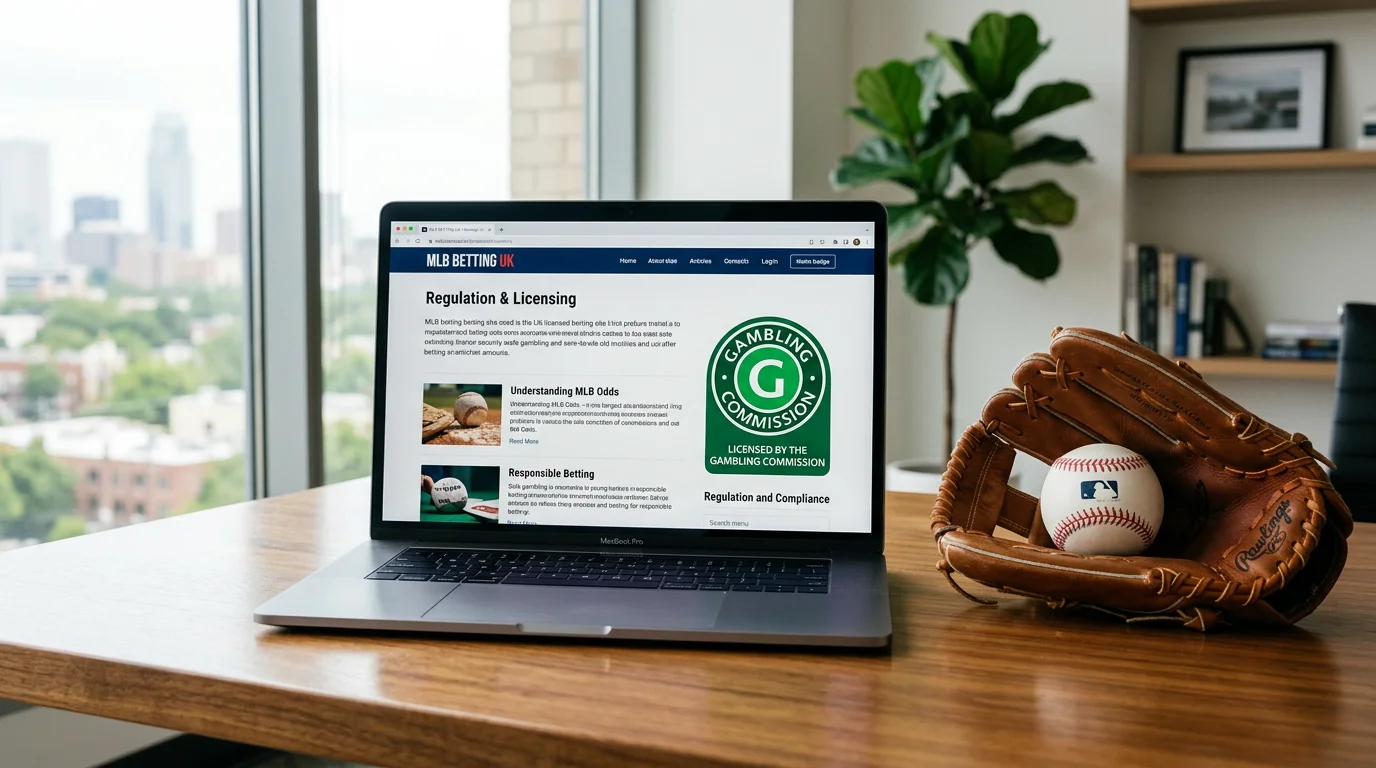
When I started betting MLB from the UK, the regulatory side felt like an afterthought. I cared about pitching matchups, park factors, and decimal odds — not licence numbers and compliance frameworks. It took a dispute with a bookmaker over a voided bet to change my perspective. Understanding how the Gambling Commission operates, what protections it enforces, and where its authority ends is not bureaucratic trivia. It is practical knowledge that affects your money, your account, and your rights as a bettor. The UKGC carried out roughly 9,700 compliance actions in the 2024-25 reporting year, more than double the prior year’s figure, and issued 4.2 million pounds in fines across 24 enforcement cases. The regulator is active, and its decisions ripple through every betting account in the country.
MLB betting in the UK sits under the same regulatory umbrella as football, horse racing, and every other sport. There is no separate framework for American sports. If a bookmaker holds a UKGC licence, its MLB markets are subject to the same rules on fairness, transparency, and consumer protection as its Premier League offerings. That equivalence is your baseline. Everything I cover here applies whether you are betting a Monday night moneyline or a World Series future.
UKGC Licensing Standards for Baseball Betting Platforms
A UKGC licence is not a rubber stamp. The Commission sets requirements for how operators handle customer funds, how they present odds and promotions, how they verify age and identity, and how they respond to complaints. Andrew Rhodes, the UKGC’s CEO, has described the survey evidence as a key building block for understanding gambling behaviour and its consequences, and the Commission uses that evidence to calibrate its oversight. For bettors, the practical upside is straightforward: a licensed operator must keep your funds segregated, must honour the terms of the bets you place, and must provide a clear complaints process if something goes wrong.
Operators who fall short face real consequences. The 9,700 compliance actions in 2024-25 covered everything from advertising breaches to failures in anti-money-laundering checks. The 4.2 million pounds in financial penalties targeted operators who did not meet their obligations on responsible gambling, customer verification, or promotional transparency. For you as a bettor, this means the bookmaker taking your MLB wager is operating under genuine pressure to follow the rules — not because they want to, but because the cost of non-compliance is tangible and public.
The licensing framework also means that unlicensed operators — offshore sites, unlicensed exchanges, or grey-market platforms — offer none of these protections. If you place an MLB bet with an unlicensed operator and a dispute arises, you have no recourse through the UKGC. I have heard stories from bettors who used offshore sites for better odds on baseball, only to find their withdrawals frozen or their accounts closed without explanation. The marginally better price is never worth the regulatory void.
Deposit Limits, Reality Checks, and Self-Exclusion
The 162-game MLB season is a grind. Games run almost every night from late March through early October, and the temptation to bet every slate is constant. The UKGC requires all licensed operators to offer tools that help bettors manage their activity, and these tools are worth using whether you consider yourself at risk or not.
Deposit limits cap how much you can add to your account within a set period — daily, weekly, or monthly. I set a monthly deposit limit at the start of each baseball season based on the bankroll I have allocated for the year. It acts as a physical guardrail against the urge to top up after a losing week. Reducing a deposit limit takes effect immediately; increasing it requires a cooling-off period, which is exactly the right design — it is easy to protect yourself and hard to undo that protection impulsively.
Reality checks are pop-up notifications that appear after a set period of continuous betting. If you set a one-hour reality check, the bookmaker will interrupt your session with a summary of time spent and money wagered. For MLB live betting — where the pace of action can swallow hours without you noticing — this is a genuinely useful feature. According to the GSGB Annual Report 2024, 2.7% of UK adults scored 8 or higher on the Problem Gambling Severity Index, and that figure underscores why these tools exist. Even bettors who would never describe themselves as problem gamblers benefit from periodic prompts to step back and assess.
Self-exclusion through GAMSTOP locks you out of all UKGC-licensed gambling sites for a minimum of six months, with options extending to five years. It is the nuclear option, but it is there, and it works. If you ever find that MLB betting is no longer enjoyable — if it feels like an obligation rather than a choice — GAMSTOP is a single registration that covers every licensed operator simultaneously.
Tax on Betting Winnings in the UK
This is the question I get from American friends every time they learn I bet from the UK: “how much tax do you pay on winnings?” The answer delights them. In the United Kingdom, betting winnings are not subject to income tax or capital gains tax. The tax burden sits on the operator, not the bettor. Bookmakers pay a 21% point-of-consumption tax on their gross gambling yield from UK customers, and that cost is baked into the odds they offer rather than extracted from your payouts.
This has practical implications for MLB bettors. If you back an underdog at 3.50 and it wins, you keep the full payout — no withholding, no filing, no forms. Compare that to the United States, where bettors must report winnings above certain thresholds to the IRS and may face state-level taxes on top. The UK’s tax-free status for bettors is one of the genuine structural advantages of wagering from this side of the Atlantic, and it applies equally to a 5 GBP free bet and a 5,000 GBP futures payout.
One nuance: spread betting on MLB, conducted through firms regulated by the Financial Conduct Authority rather than the UKGC, is also tax-free for the bettor under current rules, because spread betting profits are classified as gambling winnings rather than capital gains. That distinction matters if you explore financial spread markets on baseball, which operate under a slightly different regulatory framework.
Your Rights When Things Go Wrong
Every licensed bookmaker must provide access to an Alternative Dispute Resolution (ADR) service — an independent body that reviews complaints the operator and the bettor cannot resolve between themselves. If your MLB bet is voided for reasons you believe are unfair, or if a promotional offer is not honoured as advertised, the ADR process gives you a structured route to challenge the decision without going to court.
The process is not instant. ADR cases can take weeks to resolve, and the outcome is not guaranteed in your favour. But the existence of the mechanism changes the power dynamic. A bookmaker that knows its decisions can be reviewed by an independent adjudicator is more likely to resolve complaints fairly at the first stage. I have used the ADR process once, on a disputed MLB settlement involving a rain-shortened game, and the resolution was reasonable — not because the system was perfect, but because it existed at all.
Regulation does not make betting risk-free. It makes it structured, transparent, and subject to accountability. The UKGC framework is among the most rigorous in the world, and it applies fully to every MLB bet you place at a licensed UK bookmaker. Knowing the rules does not guarantee profits, but it guarantees that the game you are playing is fair — and in an industry built on probabilities, fairness is the one thing worth demanding.
Do I pay tax on MLB betting winnings in the UK?
No. In the United Kingdom, all betting winnings — including those from MLB wagers — are tax-free for the bettor. The tax obligation falls on the bookmaker, who pays a point-of-consumption tax on gross gambling yield. You keep the full payout from any winning bet, with no withholding or reporting requirements.
What should I do if a UK bookmaker limits my baseball betting account?
Start by requesting a written explanation from the operator. While bookmakers are legally permitted to limit or close accounts for commercial reasons, the UKGC expects operators to communicate restrictions clearly. If you believe the limitation is unfair or was applied without proper notice, escalate through the bookmaker’s complaints procedure and, if unresolved, through the ADR service linked from their website.